

Intranasal Flu Vaccine in Australia: A Complete Guide for 2026
Key Takeaways:
• The intranasal flu vaccine is a needle-free nasal spray for children aged 2 to 17 in Australia
• It protects against three flu strains and is just as effective as the standard flu shot
• Free through state programs in NSW, QLD, SA, and WA for eligible children in 2026
• Not suitable for children with a weakened immune system or severe asthma
• Speak with your GP or pharmacist to find out if it is right for your child
The intranasal influenza ‘flu’ vaccine is now available in Australia for the first time in 2026. This needle-free nasal spray flu vaccine offers an alternative to the traditional flu injection, particularly for children aged 2 and older.
We have put together this guide to help you understand how the intranasal flu vaccine works, who is eligible, and where to access it. Whether you are a parent looking for a needle-free option or simply want to learn more, this guide covers everything you need to know about the nasal spray flu vaccine in Australia.
What Is the Intranasal Flu Vaccine?
The intranasal flu vaccine is a needle-free influenza immunisation delivered as a nasal spray. Unlike traditional flu injections that use inactivated viruses, the nasal spray contains a live attenuated (weakened) influenza virus that triggers immune protection without causing the flu.
The vaccine is trivalent, meaning it protects against three influenza strains- influenza A subtypes and influenza B lineage.
The live attenuated virus in the nasal spray is cold-adapted, meaning it can only replicate in the cooler environment of the nasal passages. This allows the vaccine to build protection right in the nasal passages, as well as throughout the rest of the body.
How Does the Nasal Spray Flu Vaccine Work?
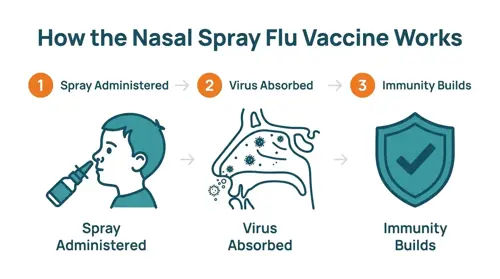
The nasal spray flu vaccine is given as a small spray of liquid into each nostril. The Australian Immunisation Handbook notes that each 0.2 mL dose is split evenly between both nostrils.
The weakened influenza viruses in the nasal spray are absorbed through the nasal passages. The immune system recognises these weakened viruses and builds protection against influenza without causing the actual illness.
This process is different from injectable flu vaccines, which use inactivated (killed) viruses and require a needle. The nasal spray approach trains the immune system at the point of entry where influenza viruses typically enter the body.
Who Is Eligible for the Intranasal Flu Vaccine in Australia?
The intranasal flu vaccine is TGA-approved for children and adolescents aged 2 to less than 18 years. Adults are not currently eligible for the nasal spray flu vaccine in Australia.
Data from NCIRS shows the nasal spray works just as well as the standard flu injection in children. However, it is not recommended for children with a weakened immune system.
State-by-State Funding for the Intranasal Flu Vaccine in 2026
Several Australian states are funding the intranasal flu vaccine through dedicated programs in 2026. Eligibility varies by state.
State | Age Group Funded | Program Name | Source |
New South Wales | Children aged 2 to under 5 | NSW Nasal Spray Influenza Vaccination Program | |
Queensland | Children aged 2 to 5 (inclusive) | QLD Nasal Spray Flu Immunisation Program | |
South Australia | Children aged 2 to under 5 | SA State Program | |
Western Australia | Children aged 2 to under 12 | WA Needle-Free Flu Vaccine Program |
Findings from NCIRS confirm the intranasal flu vaccine is also available by private prescription in all states and territories for children aged 2 to under 18 years.
Can Adults Get the Nasal Flu Vaccine in Australia?
The intranasal flu vaccine is not currently approved for adults in Australia.
Adults who wish to be vaccinated against influenza can receive one of the injectable inactivated influenza vaccines available through GPs, pharmacies, and community vaccination clinics.
Benefits of the Needle-Free Flu Vaccine for Children
The nasal spray flu vaccine offers several practical advantages for children and their families:
• No needle required. The vaccine is delivered as a quick, painless spray into each nostril. This is particularly helpful for children with a fear of needles.
• Equivalent effectiveness. NCIRS reports the nasal spray protects children just as well as the standard flu injection.
• Strong local immunity. The nasal spray builds immune protection directly in the nasal passages, where influenza viruses typically enter the body.
• No preservatives or adjuvants.
• Quick administration. The spray is administered in seconds, with no recovery time needed.
Intranasal Flu Vaccine Side Effects and Safety
Side effects from the nasal spray flu vaccine are generally mild and short-lived. Queensland Health lists the most commonly reported reactions as:
• Runny or blocked nose
• Sore throat
• Headache
• General tiredness
• Low-grade fever
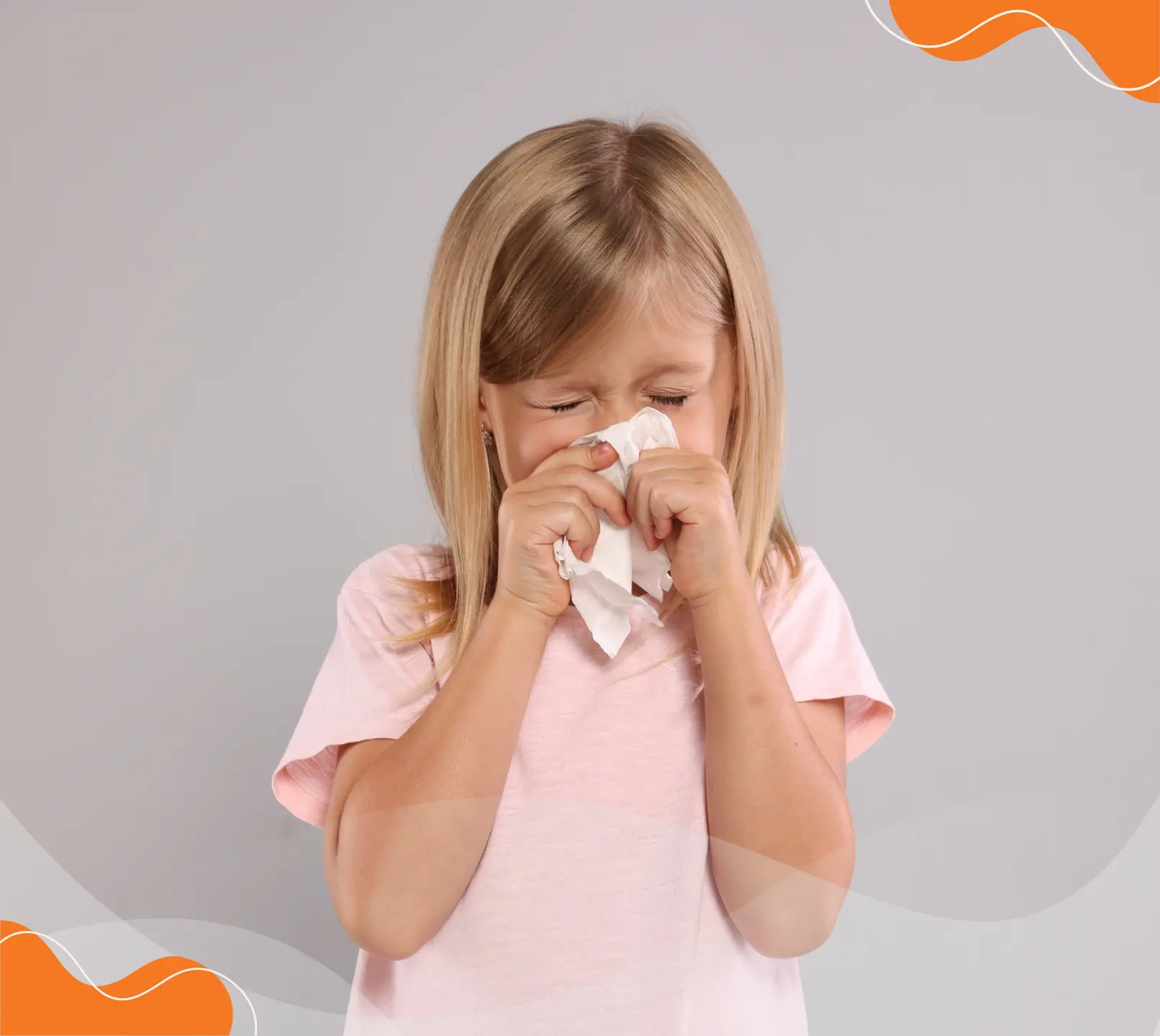
These side effects typically last 1 to 2 days and are much milder than actual influenza symptoms. The body's immune response after vaccination may cause nasal symptoms similar to early influenza infection, but these resolve quickly.
Serious side effects such as anaphylaxis are extremely rare. A NCIRS review of clinical trial data found no difference in serious reactions between the nasal spray and the standard flu injection.
Who should not receive the nasal spray flu vaccine:
• Children with a weakened immune system
• Children under 2 years of age
• Children with severe asthma or active wheezing
• Severe egg allergy (anaphylaxis) or allergy to any of the ingredients
• Children or adolescents receiving salicylate therapy
Where to Get the Intranasal Flu Vaccine in Australia
The intranasal flu vaccine is available through several channels across Australia:
1. GPs and medical centres. Doctors at participating medical practices can administer the nasal spray flu vaccine. Contact your local practice to confirm availability.
2. Pharmacies. Some pharmacies are authorised to administer the intranasal flu vaccine, depending on your state or territory.
3. Community vaccination clinics. State-funded programs may offer the nasal spray at community immunisation clinics, particularly for eligible children.
For children in funded age groups (see the state-by-state table above), the nasal spray flu vaccine is provided free of charge through state programs. For children aged 2 to 17 who are not in a state funded program, the vaccine is available by private prescription.
Intranasal Flu Vaccine vs Traditional Flu Shot: Key Differences
Feature | Intranasal Flu Vaccine | Traditional Flu Injection |
Delivery method | Nasal spray | Injection (needle) |
Virus type | Live attenuated (weakened) | Inactivated (killed) |
Age eligibility | 2 to under 18 years (Australia) | 6 months and older |
Common side effects | Runny nose, congestion, sore throat | Injection site pain, headache, fatigue |
Strains covered | Trivalent (3 strains) | Trivalent (3 strains) |
Effectiveness | Equivalent to injectable in children | Standard benchmark |
Preservatives | None | Varies by brand |
Contraindications | Weakened immune system (immunocompromise), severe asthma, severe egg allergy, salicylate use | Severe egg allergy (some brands) |
*Sources: NCIRS, Australian Immunisation Handbook, *TGA
Speak to a GP about the Intranasal flu vaccine today
The intranasal flu vaccine is a safe, effective, and needle-free option for children aged 2 and older in Australia. State-funded programs in NSW, QLD, SA, and WA provide it free for eligible children in 2026.
Speak with your GP about eligibility and availability. We encourage all families to protect their children against influenza each year.
Frequently Asked Questions About the Intranasal Flu Vaccine
Is the intranasal flu vaccine a live virus?
Yes, the intranasal flu vaccine contains a live attenuated (weakened) influenza virus. The virus is cold-adapted and can only replicate in the cooler nasal passages, not in the lungs or the rest of the body. NCIRS confirms it cannot cause influenza infection.
Where can I get the nasal flu vaccine in Australia?
The nasal spray flu vaccine is available through GPs, pharmacies, and community vaccination clinics across Australia. In NSW, QLD, SA, and WA, funded programs provide the vaccine free for eligible children. For all other eligible children aged 2 to 17, the vaccine is available by private prescription.
How long does the flu vaccine last?
Flu vaccines, including the intranasal flu vaccine, provide protection for the current influenza season. The influenza virus changes each year, so annual vaccination is recommended. Protection typically develops within two weeks of vaccination and lasts throughout the flu season.
Is the nasal spray flu vaccine free in Australia?
The nasal spray flu vaccine is free for eligible children through state-funded programs in NSW, QLD, SA, and WA in 2026. For children outside funded age groups, the vaccine is available by private prescription at an out-of-pocket cost. Contact your GP or pharmacist for current pricing.
Can adults get the intranasal flu vaccine in Australia?
No, the intranasal flu vaccine is not currently approved for adults in Australia. Adults should receive an injectable inactivated influenza vaccine from their GP or pharmacist.
References
1. Therapeutic Goods Administration (TGA) -- 2026 seasonal influenza vaccines, TGA approval and vaccine composition -- https://www.tga.gov.au/resources/publication/corporate-reports/2026-seasonal-influenza-vaccines -- Accessed 2026-04-01
2. NCIRS -- Influenza vaccines FAQs, effectiveness, mechanism of action, side effects -- https://ncirs.org.au/influenza/influenza-vaccines-frequently-asked-questions-faqs -- Accessed 2026-04-01
3. NCIRS -- State and territory funding for the intranasal flu vaccine in 2026 -- https://ncirs.org.au/influenza/state-and-territory-funding-intranasal-flu-vaccine-2026 -- Accessed 2026-04-01
4. Queensland Health -- 2026 QLD Nasal Spray Flu Immunisation Program, side effects, eligibility -- https://www.health.qld.gov.au/clinical-practice/guidelines-procedures/diseases-infection/immunisation/schedule/2026-queensland-nasal-spray-flu-immunisation-program -- Accessed 2026-04-01
5. NSW Health -- NSW Nasal Spray Influenza Vaccination Program for health professionals -- https://www.health.nsw.gov.au/immunisation/professionals/Pages/intranasal-flu-vaccine.aspx -- Accessed 2026-04-01
6. WA Government -- Cook Government secures 130,000 doses of needle-free flu vaccine for WA kids -- https://www.wa.gov.au/government/media-statements/Cook%20Labor%20Government/Cook-Government-secures-130,000-doses-of-needle-free-flu-vaccine-for-WA-kids-20251001 -- Accessed 2026-04-01
7. Australian Immunisation Handbook -- FluMist product information, administration details -- https://immunisationhandbook.health.gov.au/vaccines/flumist -- Accessed 2026-04-01
8. TGA -- FluMist Quadrivalent ARTG listing 244892 -- https://www.tga.gov.au/resources/artg/244892 -- Accessed 2026-04-01
9. Queensland Health -- FluMist FAQ PDF, side effects and safety data -- https://www.health.qld.gov.au/__data/assets/pdf_file/0026/1463813/flumist-faq.pdf -- Accessed 2026-04-01